


Medieval Defense & Conquest
Vojtech Jesatko
I approached Medieval Defense & Conquest as a quick decision test: does this free medieval strategy game offer enough meaningful planning to deserve space on a phone, or is it better treated as a short distraction? After spending time with it, my answer is positive, with an important qualification. It is most appealing if you enjoy building an army, protecting territory, and making gradual choices about when to defend and when to push outward. It is less suitable if you want a deep historical simulation, a story-heavy campaign, or a completely frictionless experience without optional spending.
The game comes from developer Vojtech Jesatko and sits in the strategy section for Android. Its central promise is easy to understand: establish a stronghold, assemble forces, withstand attacks, and expand your control. That familiar formula works because it gives each short session a clear purpose. I never needed a long explanation before making a decision, but I also did not feel that every move was meaningless.
It is free to install, carries an Everyone 10+ content rating, and has already passed half a million installs. The current version is 260817.66, while the device requirement reaches back to Android 7.1. Those details make it approachable for people using older phones, although the real question is not whether it can run on your device. The better question is whether its medieval defense-and-expansion loop matches the kind of strategy you actually enjoy.
How I Would Decide Whether It Fits
Start with the kind of strategy you want
I would separate potential players into three groups. The first group wants compact sessions with visible progress: strengthen a position, prepare an army, survive pressure, and then claim more ground. This is where the game makes the strongest case for itself. The second group wants a long-form empire simulator with diplomacy, detailed economics, and a large historical layer. That player may find the experience too focused on the battlefield. The third group mainly wants a relaxing medieval theme with very little pressure. For them, the defensive side may be attractive, but the need to think ahead can make it less casual than it first appears.
My own decision rule is simple: if the words defense planning and army building sound more appealing than collecting cards, solving puzzles, or managing a realistic kingdom, this is worth trying. If you usually abandon strategy games once the opening tutorial feeling disappears, I would be more cautious. The game depends on the satisfaction of improving a position over time, not on delivering a completely different surprise every few minutes.
Related News






What to watch during the first sessions
I recommend paying attention to how often you are making a real choice rather than merely tapping through progress. A useful early test is to ask whether you are saving resources for a stronger defensive setup, investing in forces for an attack, or reacting to an immediate threat. If you find yourself choosing between those priorities, the core loop is working for you. If every action feels obvious, the game may not provide enough strategic texture for your taste.
Another practical test is whether you enjoy recovering from a weak position. Medieval strategy is rarely interesting when every battle is guaranteed. The more revealing moments come after an inefficient decision, when you must decide whether to rebuild, hold your territory, or risk a counterattack. I found that this recovery mindset is more important here than simply having the largest possible army.
Why the theme helps, and where it can mislead
The medieval setting gives the game an immediate identity. Walls, armies, and territorial ambition are easier to understand than an abstract collection of menus. However, the theme should not make you expect a full historical experience. I would choose this for the feeling of commanding a compact medieval conflict, not for documentary accuracy or a detailed recreation of a particular period.
Gallery
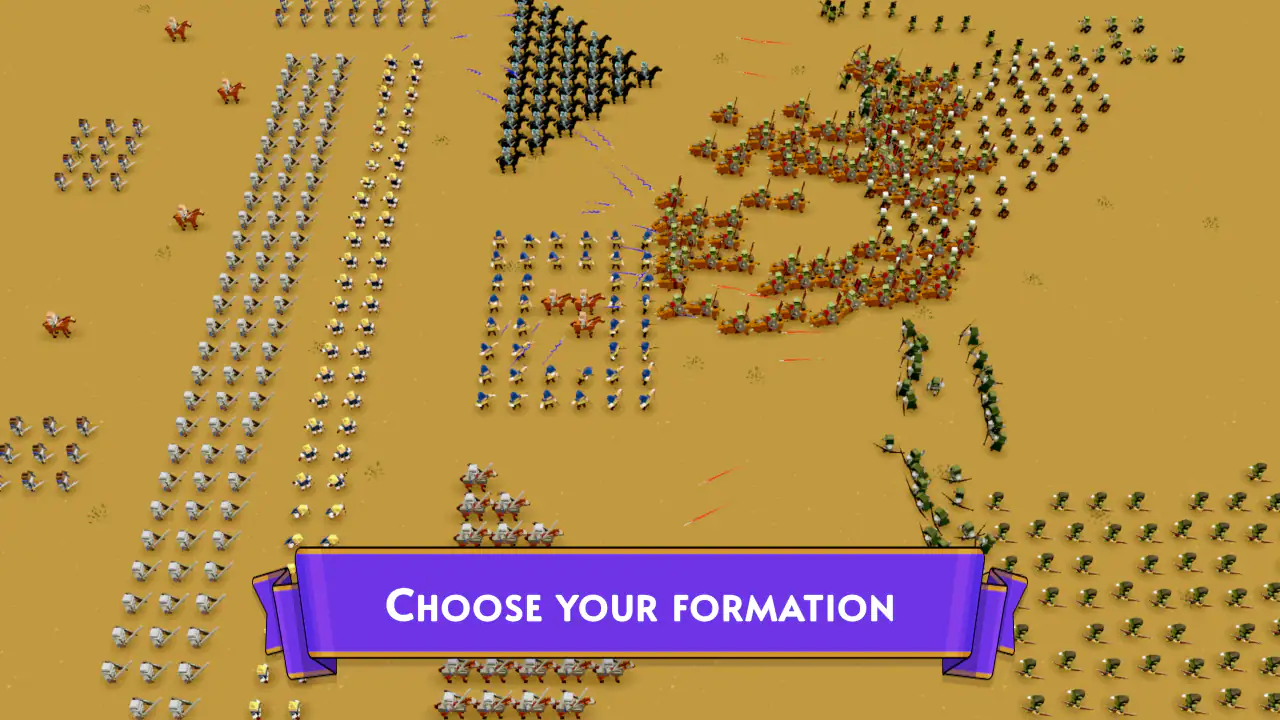
That distinction matters when comparing it with alternatives. Some strategy games use medieval imagery mainly as decoration around a highly social or competitive system. Others concentrate on city construction and let warfare remain secondary. This game is better suited to someone who wants the defense-and-conquest idea to stay at the center of the experience rather than become a small feature inside a much larger management package.
The practical cost of trying it
Because the game is free, the initial decision is low risk. That does not mean the long-term decision is cost-free. Optional in-app purchases range from $0.99 to $38.99 per item, so I would set a personal spending limit before becoming invested in progression. The safest approach is to treat purchases as optional convenience rather than part of the basic admission price.
I also recommend deciding in advance whether you want a purely free run or are comfortable paying when progress slows. This small boundary prevents a common problem with free strategy games: starting with a clear plan, then changing that plan after becoming attached to a growing empire. If you prefer knowing the full price upfront, a premium strategy title may feel more comfortable even if its first cost is higher.
What kind of player will get the most from it?
I think the best match is someone who likes a clear strategic loop without needing a huge rulebook. You might enjoy checking your position during a break, considering your next military investment, and returning later with a plan rather than playing continuously for hours. The game also suits players who like the emotional rhythm of defense: tension builds, a threat arrives, and preparation finally has a chance to pay off.
It is less convincing for players who need a strong narrative reason to continue. I did not approach it expecting character development or a cinematic campaign, and I would not recommend it on those grounds. Likewise, if your ideal strategy game is built around diplomacy, trading, or detailed population management, you may prefer an empire-management alternative where warfare is only one part of a wider system.
Where the Game Wins, and Where Another Choice May Be Better
The strongest part is the defense-to-expansion rhythm
The most appealing design idea is the tension between holding what you have and reaching for more. Expansion is tempting because a larger realm suggests future strength, but every outward move also creates more responsibility. I found that the game is more enjoyable when I resisted the urge to expand automatically. A secure position can be more valuable than a larger but fragile one, especially when the next conflict arrives before the army is ready.
This creates a useful habit: before attacking, I consider what the move leaves behind. Can the remaining forces protect the core? Will the new territory actually improve my position, or am I simply chasing visible progress? That is a more interesting question than “Can I win this battle?” and it is one of the concrete reasons I would recommend the game to a strategy fan.
A realistic everyday scenario
Imagine opening the game during a short evening break. You have enough time for one focused decision, not an extended gaming session. Your first instinct is to strengthen the army, but the defensive situation suggests that a more cautious investment would prevent a setback. You choose preparation instead of immediate conquest, close the game, and return later with a better chance of controlling the next encounter.
That scenario captures the game’s practical appeal. It can fit around a busy day because the objective is easy to remember, yet the decision does not have to be mindless. I would use it during a commute or while waiting for an appointment, provided I wanted a strategy game rather than something purely relaxing. The same structure can become frustrating, however, if you only have time for instant results and dislike leaving a plan unfinished.
Three habits that make the experience better
My first tip is to treat defense as an active investment, not a delay before the “real” game begins. Players often see expansion as progress and protection as hesitation. In this setting, that is a costly mindset. A stronger defensive base gives you more freedom to choose the timing of an attack instead of reacting to every threat.
My second tip is to avoid spending every available resource immediately. Keeping a reserve gives you room to respond when the situation changes. The exact balance depends on your current position, but the broader lesson is consistent: a plan with no flexibility can collapse after one unexpected pressure point. I got better results when I left myself a way to recover rather than optimizing only for the next visible improvement.
My third tip is to judge an attack by what happens after victory. Winning a battle is not automatically the same as improving the empire. Consider whether the result leaves your central defense exposed or forces you into a costly rebuilding cycle. This is the kind of trade-off that generic descriptions rarely explain, but it is central to deciding whether the game feels strategic rather than merely repetitive.
Progression is approachable, but not endlessly deep for everyone
The accessible structure is one of its advantages. I could understand the broad purpose of my actions without studying a complicated manual. That makes the game easier to recommend than a sprawling strategy title that takes several sessions before its systems become readable. New players can focus on the immediate relationship between army strength, defense, and conquest.
The trade-off is that experienced strategy players may eventually want more layers. If you need a wide range of political choices, intricate resource chains, or a large roster of distinct strategic identities, this may feel narrower than your preferred alternative. I would not call that a flaw by itself. It is a question of scope: the game is strongest when its focused loop feels deliberate, not when it is judged as a replacement for a full-scale empire simulator.
How it compares with common alternatives
Against tower-defense games, this title is more attractive to me when I want decisions that extend beyond placing defenses in a fixed lane. The medieval army-and-conquest framing gives the session a broader sense of territory and responsibility. On the other hand, a dedicated tower-defense game may offer more precise moment-to-moment placement and a clearer puzzle-like battlefield.
Compared with city builders, this game puts military pressure closer to the front. A city-building alternative is usually the better choice if your pleasure comes from arranging production, improving services, and watching a settlement grow peacefully. Here, development matters because it supports survival and expansion, so players seeking a calm construction sandbox may feel that the conflict interrupts the part they enjoy.
Compared with large online strategy games, the appeal is its more focused identity. You are not choosing it for a vast social world or for the complexity of coordinating a massive alliance. That can be a benefit for someone who wants a self-contained mobile strategy experience. It can also be a limitation if competing with other players and participating in a living community are the main reasons you play this genre.
Where friction appears
The free-to-play structure deserves attention even though it lowers the barrier to entry. Optional purchases can affect how some players perceive progress, particularly if they dislike seeing paid shortcuts in a strategy game. I would not begin with the assumption that spending is necessary, but I would remain aware of how quickly convenience can become part of the expected routine.
There is also a mental fatigue trade-off. Defense and expansion sound straightforward, yet repeated choices about timing can become tiring when you are looking for a passive experience. I would skip this game on days when I want a simple visual distraction. Its value comes from paying attention, even when the individual actions are easy to understand.
What switching to it really means
Moving from a city builder to this game means accepting that a beautiful, steadily growing settlement may not be the main reward. Moving from a tower-defense title means becoming more comfortable with decisions that are not confined to one immediate attack route. Moving from a premium strategy game means adapting to optional purchases and a different sense of pacing.
The switching cost is therefore less about learning controls and more about changing expectations. I would give it several sessions before judging it, because the early appeal is not only the medieval presentation. The important question is whether you begin to think in terms of reserves, defensive depth, and the consequences of expansion. If that way of playing feels satisfying, the transition is worthwhile. If you keep wishing for another genre’s central feature, it is better to return to the alternative that already matches your habits.
Device, age suitability, and version considerations
The Android requirement of 7.1 makes the game approachable for people who do not own a recent phone. That is useful for families sharing older devices or for players who keep a secondary handset for games. Still, compatibility alone should not decide the download. Strategy sessions are more enjoyable when the interface remains comfortable and the device handles repeated play without becoming a distraction.
The Everyone 10+ rating makes it a reasonable option for older children and adults who want a medieval conflict theme without choosing a more mature game. I would still make the decision with the individual player in mind, since the rating does not tell you whether someone will enjoy the pressure of defending territory. The current version, 260817.66, is also worth checking when installing or updating, especially if you are comparing the experience across devices.
My recommendation for different players
I recommend trying it if you want a free strategy game with a clear medieval identity, enjoy balancing protection against ambition, and prefer manageable decisions over an enormous rule set. It is particularly suitable for players who like returning to a developing position and asking what deserves attention next.
I would skip it if you need a story-driven adventure, a highly detailed historical simulation, or a strategy game with no optional purchase layer. I would also choose a dedicated city builder for peaceful construction, a specialized tower-defense game for tightly focused battlefield puzzles, or a larger online strategy experience for social competition and broad empire management.
For everyone else, the sensible path is to install it without treating the free entry as a promise of unlimited depth. Play long enough to see whether the defense-versus-conquest decision becomes genuinely interesting. If it does, the game has earned a place in your rotation. If it does not, there is no reason to force the medieval theme to carry an experience that does not fit your preferred style.
With an average rating of 4.5 from around nine thousand ratings, the game has clearly found an audience, but my recommendation is based on its particular strengths rather than its popularity. Its best quality is the pressure to make expansion serve defense, not replace it. That gives the free release a useful strategic personality. I would recommend it to a friend who wants approachable medieval planning in short, purposeful sessions, while being honest that players seeking a deeper or more predictable premium experience may be happier elsewhere.
Overall, Medieval Defense & Conquest is a good choice when you want to think about territory, army readiness, and timing without committing to a massive strategy system. It wins through focus, not sheer complexity. Give it a try if that focus sounds like a strength; choose another category if you want the game to build a world, tell a story, or compete socially on a much larger scale.
FAQs for Medieval Defense & Conquest
What is Medieval Defense & Conquest?
Medieval Defense & Conquest is a strategy game that combines tower defense with kingdom-building and conquest mechanics. Players defend castles and territories against invading forces, manage available resources, improve defensive structures, and expand their influence across a medieval map. The game is designed for users who enjoy planning, upgrading units, and making tactical decisions rather than relying only on fast reflexes.
How does the gameplay work in Medieval Defense & Conquest?
Gameplay generally revolves around preparing your defenses before an attack, placing or improving defensive units, and responding to enemy waves as they advance toward your stronghold. Between battles, you can strengthen your kingdom, unlock improvements, and prepare for more difficult encounters. Success depends on choosing suitable defenses, managing upgrades carefully, and adapting your strategy to different enemy types and battlefield conditions.
Is Medieval Defense & Conquest free to download and play?
Medieval Defense & Conquest can usually be downloaded without an upfront purchase, although the exact availability and monetization may depend on the Android or iOS version. Free-to-play games commonly include optional purchases for resources, upgrades, cosmetics, or convenience features. It is worth checking the store listing before downloading, especially if you prefer a completely free experience or want to avoid accidental in-app purchases.
Does the game require an internet connection?
The connection requirements may vary depending on the feature you are using. Core defensive battles or campaign content may be available offline in some versions, while advertisements, cloud saves, online events, rankings, updates, or account-related functions can require internet access. Before relying on offline play, test the game after disabling your connection, since requirements can change through updates or differ between mobile platforms.
Is Medieval Defense & Conquest suitable for casual players?
The game can be suitable for casual players who enjoy medieval themes and gradual strategic progression, but it may require patience as missions become more challenging. Early stages are typically easier to understand, while later battles demand better planning, resource management, and thoughtful upgrade choices. Players looking for a quick arcade experience may find the kingdom-development and defense systems more involved than expected.
Pros
- Simple controls make it easy to start playing quickly.
- Short battles fit well into brief gaming sessions.
- Medieval visuals give the game a consistent atmosphere.
- Progression provides goals beyond individual battles.
- Works well for players who enjoy strategy and conquest themes.
Cons
- Some stages may feel repetitive after extended play.
- Progress can become slower as challenges increase.
- The interface can feel crowded during intense battles.
- New players may need time to understand all mechanics.
- Performance may vary on older or less powerful devices.


